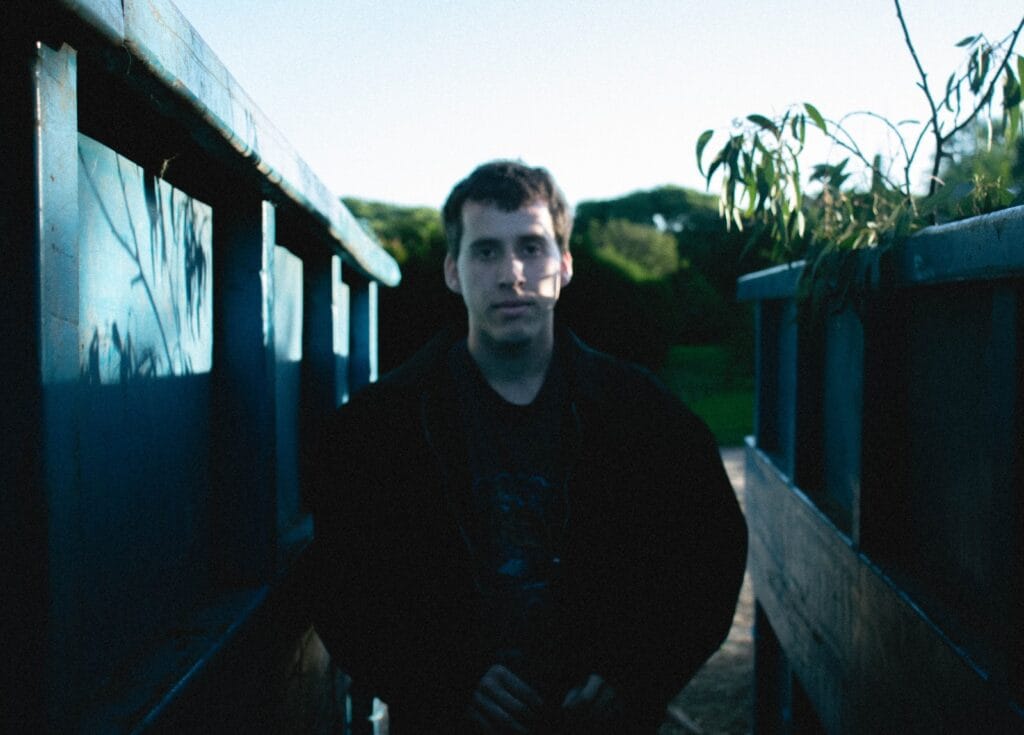
Canti, el proyecto solista de Facundo Lisola, presenta “Te diría que te quiero”, su nueva canción —fiel a su estilo alternativo y experimental— en la que explora la despedida de una versión propia que ya no le pertenece.
“En el fondo, la canción habla de la desconexión con uno mismo y con el mundo. No solo de dejar de querer a una persona, sino de perder el vínculo con lo que antes nos motivaba”, expresó CANTI sobre el significado profundo del tema.
“Te diría que te quiero” reafirma la búsqueda artística de Lisola: un sonido volador, introspectivo y emocional que desarma etiquetas y apuesta por la autenticidad.
El músico, productor y multiinstrumentista oriundo de Buenos Aires, viene de relanzar sus exitosos singles “Exitable” y “Drmrs”, y actualmente trabaja en nuevo material que sigue expandiendo su universo sonoro.
📍 Próxima fecha
- 29 de mayo – Strummer Bar (Gorriti 1631, CABA)
Sobre CANTI
Desde su irrupción con “Canti – Demos 1” y su EP “Hosono”, el artista ha construido una trayectoria basada en la sensibilidad, la experimentación y una particular manera de combinar sintetizadores, guitarras agresivas y voces vulnerables.
Influenciado por referentes como The Beatles, Radiohead, Metronomy y MGMT, CANTI invita a sumergirse en una experiencia sonora única que escapa de cualquier clasificación fácil.



Thank you for your sharing. I am worried that I lack creative ideas. It is your article that makes me full of hope. Thank you. But, I have a question, can you help me? https://www.binance.info/register?ref=QCGZMHR6
Can you be more specific about the content of your article? After reading it, I still have some doubts. Hope you can help me.
I’d argue that the content relevance is even more critical now. We’ve seen perfectly good links get devalued just because the semantic match wasn’t tight enough.
I’d love to see a follow-up post on how this integrates with social signals. We feel there’s a multiplier effect there that isn’t being fully utilized.
Great resource. I’ve sent this to a few colleagues who are still stuck in 2015-era SEO tactics. Hopefully, this wakes them up.
Brilliant articulation of the problem. The industry has been too focused on metrics like DA/DR instead of actual traffic flow and user behavior.
Just wanted to say thanks for the detailed case study. It’s rare to see actual data backing up these claims. We’ll be adjusting our Q4 roadmap based on some of these insights.
This is a solid breakdown. One thing I’d add is that the impact of these updates often lags by 2-3 weeks. We tracked this across multiple projects and found the recovery phase is where most people give up too early.
Spot on about the indexing delays. It’s not just about building the link anymore; it’s about the «stickiness» of the placement. We’ve been focusing heavily on that metric lately.
Just wanted to say thanks for the detailed case study. It’s rare to see actual data backing up these claims. We’ll be adjusting our Q4 roadmap based on some of these insights.
One minor correction: the update rollout was actually 14 days, not 10. But that doesn’t change your main point—the volatility window is getting wider.
We’ve been A/B testing this exact hypothesis. Group A (your method) is outperforming Group B by 40% in terms of ranking stability. The data speaks for itself.
I’d love to see a follow-up post on how this integrates with social signals. We feel there’s a multiplier effect there that isn’t being fully utilized.